




How to Buy the Best Sphere LED Screen to Wow Your Audiences – LED display
A sphere LED screen can turn a lobby, mall atrium, exhibition booth, museum hall, or event space into a visual landmark.
Still, this purchase needs more than a rendering. You need a display that fits the viewing path, installation structure, control, and content plan.

What Is a Sphere LED Screen?
A sphere LED screen is a curved LED display built into a ball, globe, hemisphere, or custom spherical form. It is also called a spherical LED display, LED ball display, LED globe screen, or 360 degree LED display.
The main difference is the viewing path.
A flat screen serves viewers in front of it. A sphere serves people moving around it, seeing it from side angles, upper floors, or open walkways. That makes it useful in public spaces where the display acts as an object in the room.
A sphere screen normally needs custom-shaped LED modules, a support frame, signal planning, and curved-surface content. Treat the sphere as a project system if you are comparing creative LED display products.
When Is a Sphere LED Screen the Right Choice?
A sphere fits projects where people approach the display from several directions. Common sites include shopping malls, airport halls, museums, science centers, brand lobbies, exhibitions, theme spaces, and event venues.
Picture a retail atrium.
People arrive from different entrances. Some look down from upper floors. Others pass close to the display at ground level. In that setting, a sphere can carry brand visuals, product stories, maps, seasonal campaigns, or ambient video from several sightlines.
The buying question is simple: will people view the display from more than one direction?
If yes, a sphere belongs on the shortlist. For a store or mall project, a retail LED display may handle promotion and wayfinding; a sphere adds a center object when the venue needs a landmark.
How Should You Choose Size, Pixel Pitch and Viewing Distance?
Start with the closest viewing distance. That number shapes pixel pitch, sphere diameter, content detail, and budget.
Pixel pitch means the distance between two neighboring pixels, usually shown as P2.5, P3, P4, and similar labels. A smaller pitch gives higher pixel density and suits close viewing. A larger pitch suits longer viewing distances, especially in outdoor or high-mounted projects. UHLED’s product FAQ uses this same rule for LED displays: smaller pitch for close viewing, larger pitch for farther viewing.
Sphere screens add a real content limit. Fine text and small logos can bend across the curved surface. Send real logo files, video samples, and text examples before final specification.
Use this table as the basic purchase filter:
|
Decision Point |
What to Send the Supplier |
Why It Matters |
|
Main use |
Advertising, museum content, event visual, or lobby landmark |
Use guides brightness and control |
|
Diameter |
Target sphere size and available space |
Diameter affects frame and module layout |
|
Closest viewing distance |
Nearest audience position |
This guides pixel pitch and detail |
|
Site condition |
Indoor or outdoor, sunlight, humidity, dust, wind, roof cover |
Environment affects protection and access |
|
Installation method |
Hanging, floor-standing, embedded, or ceiling-mounted |
The frame and cable route depend on it |
|
Content type |
Video, logo, text, map, or animation |
Some content needs mapping and pre-test work |
For close indoor viewing, buyers often ask about fine pitch. UHLED’s product range includes indoor display solutions, and close-view projects can be discussed alongside an indoor fine-pitch LED display when image clarity at short distance is the main issue.

What Installation and Environment Details Matter?
The screen shape is one part of the job. The structure carries the display, protects the electronics, and gives technicians access after installation.
Common forms include full sphere, hemisphere, hanging sphere, floor-standing sphere, ceiling-mounted design, and embedded creative installation. Each form changes the frame, wiring route, cooling path, and maintenance method.
Outdoor use needs tighter specification. UHLED’s LED display FAQ states that outdoor LED displays usually use IP65 or higher protection. UHLED outdoor aluminum cabinet material also includes IP66 information for outdoor display contexts. These figures apply to outdoor LED display materials and general FAQ information. A sphere project should still list the exact cabinet, protection level, and site environment in the proposal.
Ask for drawings before payment.
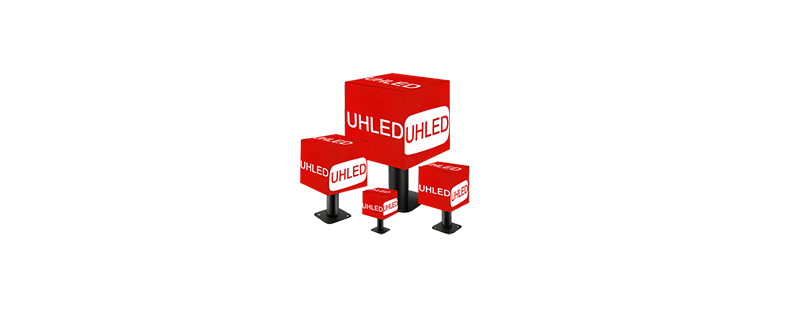
A serious drawing should show sphere diameter, frame, mounting points, power route, signal route, service access, and installation clearance. Site photos help the supplier check the practical details. For another creative format, a cube LED display shows the same project logic.
What Should You Confirm About Content and Control?
Content decides whether the sphere feels natural on site. A flat video file may play on the screen, but the visual can look stretched or cut after curved mapping.
Ask how content will be mapped. A sphere may need special editing, mapped video, or a playback test before production. Logos, text, gradients, rotating objects, and human faces need extra care.
Control should be discussed early. UHLED’s product FAQ lists Wi-Fi and HDMI control options and compatibility with NovaStar and Grayscale/HD control systems. The final project plan should state the exact controller, playback source, resolution, and signal route.
Test with real content.
Sample animations can look smooth. The project will be judged by the buyer’s own logo, language, product video, and daily playback schedule.
Supplier Checklist Before You Buy
A sphere LED screen order should include the display, frame, control system, content work, packing, installation support, and spare parts.
Before signing, ask for these items in writing:
|
Item |
What to Confirm |
|
Screen scope |
Diameter, full sphere or hemisphere, and visible area |
|
Display specification |
Pixel pitch, brightness, refresh rate, and module layout |
|
Mechanical design |
Frame material, mounting method, load points, and service access |
|
Control system |
Controller brand, signal input, playback device, and software |
|
Content handling |
File format, mapping method, and test responsibility |
|
Warranty and parts |
Warranty term, spare module plan, and post-warranty parts |
Ask what the quote excludes. Installation labor, rigging, content production, freight, import duty, and on-site equipment can sit outside a screen price.
About UHLED
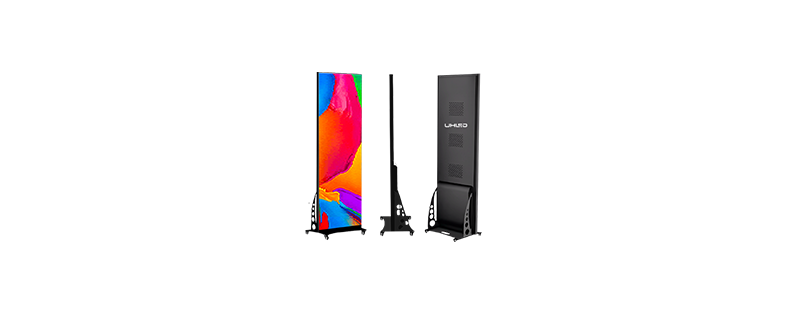
UHLED, also named Shenzhen Uhled Technology CO., LTD, is an LED display manufacturer founded in Shenzhen in 2015. The product range covers outdoor LED displays, indoor LED displays, rental LED displays, shelf LED displays, LED poster screens, transparent screens, cube LED displays, flexible LED film, and creative or irregular display applications.
For a sphere LED screen inquiry, UHLED can review the project as a custom LED display task. Send the venue type, indoor or outdoor condition, target diameter, nearest viewing distance, installation method, content type, control method, and site photos.
UHLED’s product FAQ states a 5-year warranty and about 100,000 hours of service life for LED display products. Those figures come from UHLED’s general LED display FAQ scope, so the final quote and specification sheet should confirm the exact terms for the selected project.
FAQ
Q1: What is the main benefit of a sphere LED screen?
A: A sphere LED screen gives the audience a display surface they can view from several directions. That matters in malls, museums, exhibitions, airports, and lobbies.
Q2: How should you choose pixel pitch for a sphere LED screen?
A: Start with the closest viewing distance and the detail level in the content. UHLED’s general LED display FAQ says smaller pixel pitch suits close viewing, while larger pitch suits longer viewing distances. For a sphere, send real logos, text, and video samples.
Q3: Can a sphere LED screen be used outdoors?
A: Yes, when the product design and installation plan match the outdoor site. UHLED’s FAQ states that outdoor LED displays usually use IP65 or higher protection, and UHLED outdoor aluminum cabinet material includes IP66 information for outdoor LED display contexts. The quote should still confirm the exact protection level, structure, sunlight exposure, and maintenance route.
Q4: What content should you prepare for a sphere LED screen?
A: Prepare content planned for a curved surface, especially when the screen will show text, logos, maps, or detailed product visuals. Standard flat video may need mapping or editing before it looks correct on a sphere. A practical supplier will ask for sample files and test the main visuals.
Q5: What should you send UHLED before asking for a quote?
A: Send the venue type, indoor or outdoor condition, target diameter, closest viewing distance, installation method, content type, control method, and site photos. Add any required launch date or site access limit. UHLED can discuss the display, structure, and warranty terms.


