








How Much Do LED Panels Cost These Days?
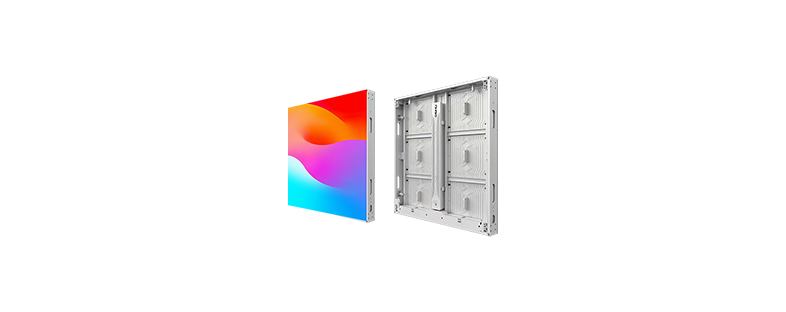
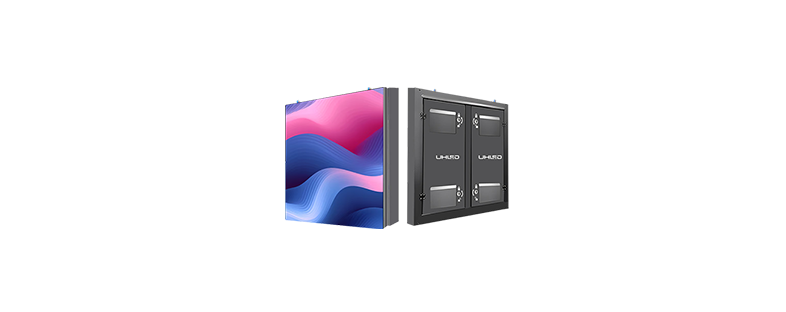
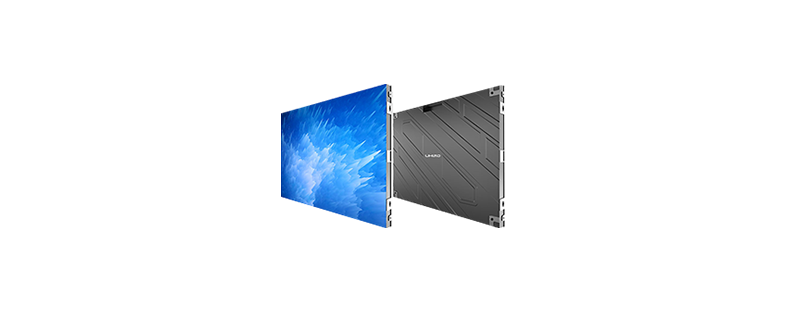
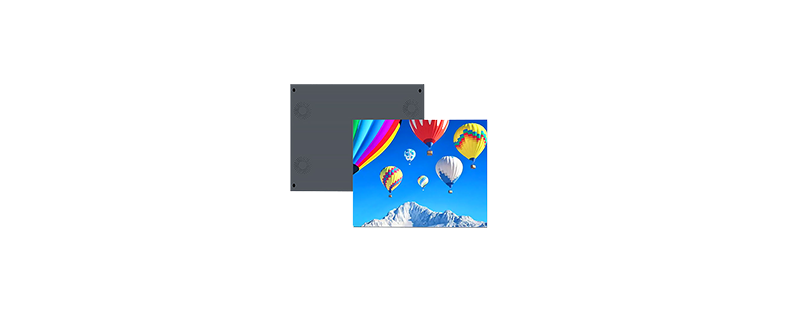
LED panel cost depends on the display format, screen size, pixel pitch, control system, installation method, and delivery scope. A flat indoor panel, an outdoor display, a rental screen, and an led cube screen follow different quotation logic.
A headline equipment price may cover only the display body. Control equipment, structural work, installation, shipping, taxes, commissioning, and maintenance support may appear as separate items.
There is no single global price that applies to every LED panel. The useful way to compare quotes is to define the product, project conditions, and commercial scope first.

What Is Included in an LED Panel Price?
An LED panel quote usually combines display hardware with the parts required to operate and install it.
Panel, Module, Cabinet, and Control System
An LED display is built from LED modules or panels. Cabinets or frames hold those modules in the required arrangement. Power supplies, signal connections, and control equipment allow the screen to receive and display content.
A complete quotation may include several hardware layers:
-
LED modules or panels
-
Cabinet or supporting frame
-
Power supplies
-
Receiving cards or related signal equipment
-
Sending equipment
-
Control software or operating accessories
-
Cables and connection parts
-
Mounting or structural components
The quotation unit also matters. A supplier may quote per panel, module, cabinet, square meter, or complete system. Confirm the unit before comparing prices across suppliers. The LED display products range can help you identify which category matches the project.
Why the Quoted Unit Matters
Two quotes may use different units for similar-looking screens. One may describe the visible display area. Another may include cabinets, control equipment, and accessories.
Ask for the exact model, quotation unit, screen area, included components, and excluded work. This simple check prevents a panel-only price from being compared with a complete project price.
How Much Do Different LED Display Formats Cost?
Display format changes the cost basis. The final amount depends on the selected model and project scope.
Flat Indoor LED Panels
Indoor LED panels are commonly planned for retail stores, showrooms, exhibitions, lobbies, meeting spaces, and other controlled environments. Close viewing often makes pixel pitch an important specification.
Pixel pitch is the distance between adjacent pixels. UHLED’s product FAQ states that a smaller pitch suits closer viewing, while a larger pitch suits longer viewing distances.
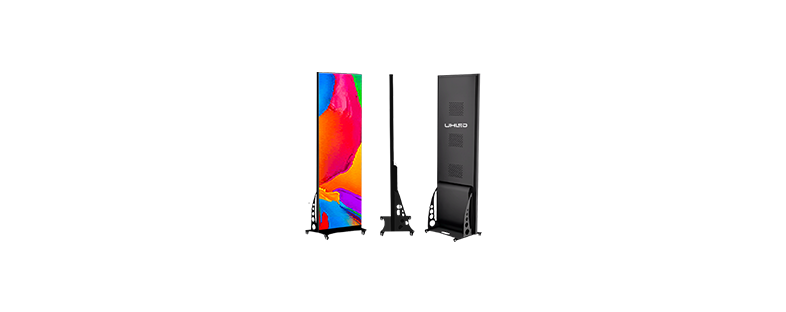
The indoor LED display category provides a useful reference point when comparing a poster-style display with a larger indoor screen. Share the nearest and typical viewing distances before asking for a quotation.
Outdoor and Rental LED Panels
Outdoor projects require environmental and brightness planning. UHLED’s FAQ states that outdoor LED displays usually use IP65 or above, while the applicable model still needs confirmation.
Outdoor quotes may also involve mounting structures, maintenance access, weather exposure, brightness control, and site preparation. These items should be listed separately.
Rental displays follow another project pattern. Repeated installation, transport, fast setup, cabinet handling, and event support can affect the total scope. A rental panel should be quoted for its intended operating and handling conditions.
LED Cube Screens and Creative Shapes
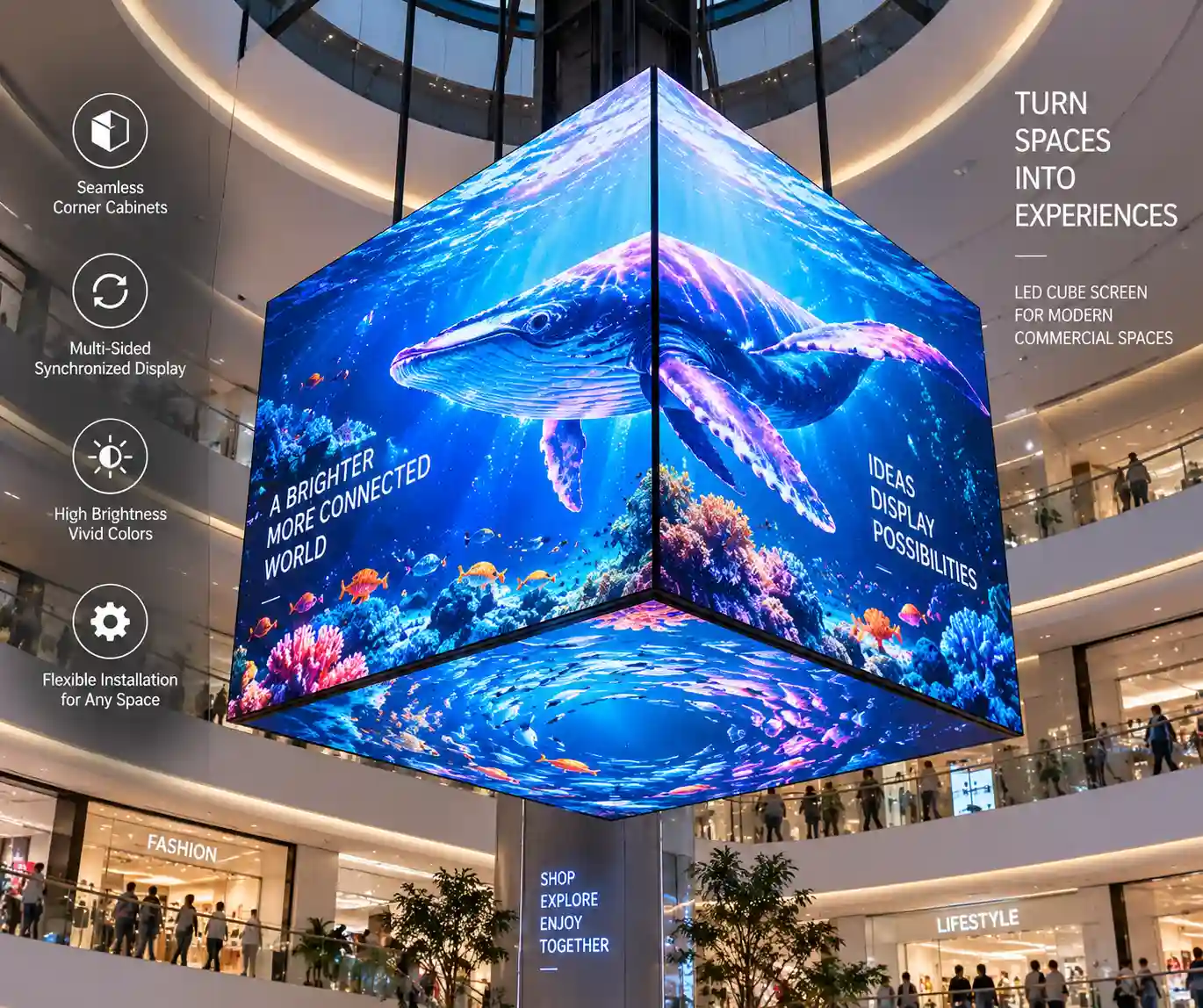
An led cube screen is a creative display format with several visible faces or a custom geometry. Its quote cannot be calculated from flat-screen area alone.
The supplier may need to review:
-
Cube width, height, and depth
-
Number of active display faces
-
Corner and edge treatment
-
Cabinet or frame construction
-
Content layout across faces
-
Viewing angles
-
Power and signal routing
-
Cooling and service access
-
Mounting or suspension method
An irregular display may need a custom structural and control discussion. UHLED’s irregular LED display category is relevant when the project uses a non-rectangular form.
What Factors Change LED Panel Cost?
Two screens with the same visible area can receive different quotes because their technical conditions differ.
Pixel Pitch and Viewing Distance
Pixel pitch affects the number of pixels used across a display area. A smaller pitch suits closer viewing. A larger pitch suits longer viewing distances, according to UHLED’s product FAQ.
Do not select a pitch by area alone. Record where the nearest viewer will stand and where most viewers will observe the screen.
A retail display near a product shelf may need a different discussion from a screen viewed across a lobby. The supplier can review the model after receiving both nearest and typical viewing distances.
Brightness, Environment, and Protection
Indoor and outdoor environments create different specification requirements. Ambient light, direct sunlight, installation location, and maintenance access all affect the project discussion.
UHLED states that brightness can be adjusted through the control system. A built-in light-sensor probe is also available for automatic adjustment as ambient light changes.
The selected model still needs confirmation. Do not transfer a brightness value from one display to another without checking the applicable product and operating environment.
Control, Refresh Rate, and Content
UHLED states that its LED displays support Wi-Fi and HDMI control and are compatible with NovaStar and Grayscale (HD) control systems.
Content requirements can change the control discussion. Tell the supplier whether the screen will show still graphics, video, scheduled promotions, live feeds, or synchronized content across several faces.
UHLED’s FAQ states that a higher refresh rate supports a more stable, flicker-free image for filming or high-speed motion scenes. If cameras or livestreaming are part of the project, include that requirement before the model is selected.
| Cost driver | Why it changes the quote | Buyer input |
|---|---|---|
| Display format | Flat, rental, outdoor, cube, and irregular formats use different structures | Required display type |
| Pixel pitch | Viewing distance guides the suitable specification | Nearest and typical viewing distance |
| Screen area and active faces | Cube screens may use several visible surfaces | Width, height, depth, and active faces |
| Environment | Indoor and outdoor conditions affect protection and brightness planning | Installation environment |
| Control method | Content workflow affects the control package | Wi-Fi, HDMI, or controller preference |
| Installation scope | Structure, wiring, access, and commissioning add project work | Mounting and service requirements |
Why Does an LED Cube Screen Need a Different Quote?
Cube geometry changes both the display hardware and the installation plan.
Geometry and Visible Faces
Start by confirming the active faces. The content may repeat on each face, or it may be designed as one coordinated visual across the cube.
The supplier also needs the intended viewing directions. A cube placed in a retail area may be viewed from several sides. A suspended event cube may require a different content and structural plan.
Record the edge dimensions and the location of each face. These details help the supplier define the cabinet layout and control requirements.
Structure, Access, and Maintenance
A cube screen needs a stable structure that matches its location. The project may use a floor-standing frame, suspended support, or another engineered arrangement.
Include power routing, signal routing, cooling, and maintenance access in the quotation brief. A screen that looks compact from the front may need working space around several faces.
UHLED states that LED display installation normally requires professional technical support. Its engineers can provide internal wiring and installation-structure diagrams. Confirm the selected model and service arrangement before fabrication begins.
Which Costs Are Often Outside the Headline Price?
A low display-only number may exclude important project items.
Control and Signal Equipment
Ask whether the price includes sending equipment, receiving cards, controllers, software, signal accessories, and cables.
For a cube screen, confirm whether one controller can manage all active faces or whether the design requires additional equipment. The answer depends on the selected system.
Structure, Installation, and Commissioning
Request a clear breakdown for structural design, fabrication, wiring, installation labor, commissioning, and operator guidance.
UHLED’s technical materials support professional installation and wiring documentation. The final service scope must be confirmed for the project.
Shipping, Taxes, and Local Work
Global projects may involve different shipping routes, duties, taxes, local labor, lifting equipment, and site preparation. These costs vary by destination and contract terms.
Ask the supplier to separate equipment, logistics, installation, and local work. A total project cost becomes easier to review when each part has a defined scope.
How Should You Compare Two LED Panel Quotes?
Compare equivalent fields and equivalent scope.
Match the Technical Fields
Check the exact model, pixel pitch, screen area, environment, brightness setup, control method, refresh-rate requirement, cabinet structure, service access, and power configuration.
For an led cube screen, add the number of active faces, corner design, content arrangement, and support structure.
Match the Commercial Fields
Check quantity, destination, shipping terms, installation scope, warranty responsibility, replacement-part terms, commissioning, and technical support.
For a retail installation, the LED display for retail stores solution page provides a related application path. Use the store layout, audience position, content schedule, and maintenance access as part of the comparison.
What Information Should You Send Before Requesting a Quote?
Send a short project brief with enough detail for the supplier to identify the correct quotation basis.
Include:
-
Display format
-
Width, height, depth, and screen area
-
Number of active faces for a cube
-
Nearest and typical viewing distances
-
Indoor or outdoor environment
-
Content type and camera use
-
Brightness-control requirement
-
Wi-Fi, HDMI, or controller preference
-
Mounting method
-
Maintenance access
-
Destination and quantity
-
Required wiring or structural documents
| Information to send | Why it matters |
|---|---|
| Display format | Separates flat, rental, outdoor, cube, and irregular pricing |
| Dimensions and active faces | Defines the display scope |
| Viewing distance | Guides pixel-pitch selection |
| Environment | Supports brightness and protection review |
| Content and camera use | Guides control and refresh-rate requirements |
| Mounting and service access | Supports structural and maintenance planning |
| Destination and quantity | Establishes logistics and quotation scope |
| Required documents | Clarifies technical deliverables |
Conclusion
LED panel cost is configuration-based. An led cube screen needs geometry, active-face, structure, viewing, control, and maintenance details before a supplier can prepare a useful quotation.
Shenzhen Uhled Technology CO., LTD was founded in Shenzhen in 2015. UHLED’s product scope includes indoor and outdoor LED displays, rental screens, shelf screens, LED posters, transparent displays, irregular displays, and other scene-application products. Company material lists eight project engineers and overseas project support.
For a quote review, send the display format, dimensions, active faces, viewing distances, environment, content type, control preference, mounting method, service access, destination, and quantity.
FAQ
Q1: How much does an LED panel cost?
A: The cost depends on the exact model, display format, pixel pitch, screen area, control package, installation scope, and destination. A panel-only price and a complete installed-screen price describe different scopes, so request an itemized quotation.
Q2: Why does an LED cube screen need a separate quotation?
A: An LED cube screen uses custom geometry and may have several active faces. The quotation must account for dimensions, corner treatment, content arrangement, structure, power routing, signal routing, cooling, and service access.
Q3: What is usually included in an LED panel quote?
A: The quote may include LED modules or panels, cabinets, power supplies, control equipment, cables, and structural parts. Confirm whether installation, commissioning, shipping, taxes, local labor, and technical support are included or listed separately.
Q4: Does pixel pitch affect LED panel cost?
A: Pixel pitch affects the display specification and can affect the quotation. UHLED’s product FAQ states that smaller pitch suits closer viewing, while larger pitch suits longer viewing. Send the nearest and typical viewing distances so the supplier can review the suitable model.
Q5: What information should I send to get an LED panel or LED cube screen quote?
A: Send the display type, dimensions, active faces, viewing distances, environment, content, camera use, brightness requirement, control preference, mounting method, service access, destination, and quantity. For a cube, include the intended viewing sides and content arrangement.


